Arrival, Exhaustion, and the Art of Knowing When to Begin: Scheduling Your Istanbul Companionship Around Your Body Clock

There is a particular irony that confronts nearly every American traveler landing at Istanbul Airport after a transatlantic or transpacific journey. You have arrived in one of the world's most electrifying cities — a metropolis that hums with energy from the Grand Bazaar to the rooftop bars of Beyoğlu — and your body is firmly convinced it is three in the morning on a Tuesday. The gap between anticipation and physical reality is rarely more pronounced than in those first hours abroad.
For travelers who have invested meaningfully in arranging elite companionship during their time in Istanbul, this mismatch carries real consequences. A conversation that might feel effortless and genuinely engaging on day three of your trip can feel hollow and forced when attempted twelve hours after a red-eye flight. The companion is the same. The setting is the same. But you are not.
Understanding jet lag not as an obstacle to overcome but as a scheduling variable to account for is one of the most underappreciated skills in international travel — and it is especially relevant when the quality of human connection is central to your itinerary.
What Is Actually Happening in Your Body
Jet lag occurs when your internal circadian clock — regulated primarily by light exposure and melatonin cycles — falls out of alignment with the local time zone. For travelers departing from the Eastern United States, Istanbul sits roughly seven to eight hours ahead. Those flying in from the West Coast face an even steeper adjustment of nine to ten hours.
The physiological effects are well-documented: disrupted sleep architecture, diminished cognitive sharpness, fluctuating mood, and reduced emotional bandwidth. What is less commonly discussed, however, is how these effects distribute themselves unevenly across the first 72 hours. Most travelers do not experience a uniform fog. Instead, they cycle through windows of surprising alertness followed by abrupt crashes — a pattern that, once recognized, becomes remarkably useful for planning purposes.
Research on circadian disruption consistently shows that emotional responsiveness — your capacity for genuine warmth, attentiveness, and social engagement — is among the first faculties to suffer and among the last to fully recover. This is worth taking seriously when your plans involve experiences that depend precisely on those qualities.
The First 24 Hours: Honor the Arrival
The temptation upon arriving in Istanbul is to immediately immerse yourself in everything the city offers. Resist it, at least partially.
The first 24 hours after a long-haul westward-to-eastward flight are best treated as a transition period rather than a launching pad. Your alertness will likely peak unnaturally in the early local evening — a product of your body clock still anchored to home — before collapsing entirely. Scheduling an immersive companionship engagement during this window is a gamble. You may feel functional on the surface while operating with significantly reduced emotional depth.
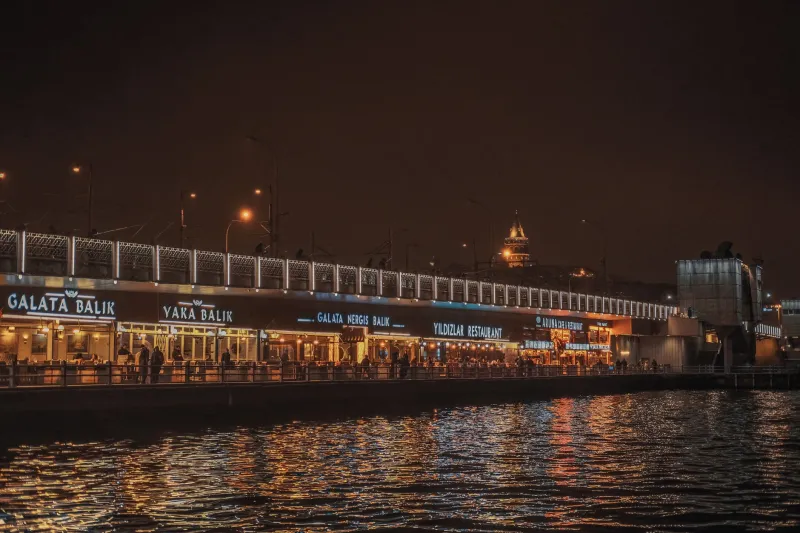
If you have arranged a companion for your arrival day, consider structuring the engagement around lighter, lower-demand experiences: a relaxed dinner at a restaurant along the Bosphorus, a slow walk through Karaköy, or a quiet evening at your hotel with good conversation and no particular agenda. The goal is presence without pressure. Elite companions in Istanbul are skilled at calibrating the energy of an encounter — communicating your physical state honestly when making your booking allows them to prepare accordingly.
Hours 24 to 48: The Adjustment Window
This is the most variable period of the jet lag cycle, and it rewards careful attention to your own patterns. Many travelers experience their first genuinely good night of sleep somewhere in this window — and the morning that follows can feel startlingly clear and open.
If your schedule permits flexibility, this is when more immersive and emotionally engaged experiences tend to yield the richest returns. A cultural excursion through the historic peninsula, an afternoon in the private galleries of Nişantaşı, or an evening that moves fluidly between venues — these are experiences that benefit from a mind that is present and receptive rather than merely functional.
Travelers who have arranged companionship for multiple evenings during their stay are well-advised to reserve their most meaningful or ambitious engagements for this phase. The body is adapting, the novelty of the city is still fresh, and the emotional openness that jet lag initially suppresses begins to reassert itself in ways that can feel genuinely expansive.
Hours 48 to 72: Full Presence, Finally
By the third day of an Istanbul visit, most American travelers have crossed what chronobiologists informally call the adjustment threshold. Sleep has normalized sufficiently. Appetite has realigned with local mealtimes. Cognitive function has returned to something close to its baseline.
Perhaps less obviously, emotional availability also reaches its peak during this window. Travelers frequently report that their most meaningful conversations, their sharpest appreciation of their surroundings, and their most genuine moments of connection occur on day three rather than day one. There is a reason for this beyond mere coincidence.
For those who have planned their Istanbul visit with companionship as a central element, the third day represents the optimal moment for experiences that require full presence: extended engagements, culturally rich excursions that invite real conversation, or simply the kind of unhurried time together that allows a genuine rapport to develop.
Practical Guidance for Booking Around Your Biology
Several straightforward principles emerge from this framework:
Book light on arrival day. If you must schedule a companionship engagement within the first 12 hours of landing, communicate your travel circumstances to the agency or companion in advance. Request an itinerary that prioritizes atmosphere over intensity.
Reserve your most meaningful engagement for day two or three. The investment you have made in arranging elite companionship in Istanbul deserves to be experienced when you are genuinely capable of being present for it.
Account for your departure direction. Eastward travel — the direction taken from the US to Istanbul — produces more pronounced and longer-lasting jet lag than westward travel. Build more recovery time into the front end of your trip than you think you need.
Communicate openly when booking. The finest companions and agencies in Istanbul are accustomed to working with international clientele who arrive fatigued. Honesty about your physical state is not a vulnerability — it is information that allows your companion to calibrate the experience in your favor.
Use afternoon light strategically. Exposure to natural afternoon light in Istanbul — particularly along the waterfront or in the open gardens of Emirgan — accelerates circadian adjustment more effectively than any supplement. An outdoor engagement on your first full day serves both your recovery and your experience simultaneously.
The Deeper Point
Elite companionship, at its finest, is not a transaction that occurs independently of context. It is an experience shaped by everything you bring to it — your mood, your alertness, your capacity for genuine engagement. Istanbul is a city that rewards presence. Its textures, its conversations, its rhythms reveal themselves most fully to travelers who arrive at them with an open and rested mind.
Jet lag will not ruin your trip. But ignoring it when planning your most meaningful engagements is a needless concession to circumstance. The travelers who return from Istanbul with the most vivid and lasting impressions are rarely those who pushed through fatigue to maximize every hour. They are the ones who understood when to rest, when to begin, and when the conditions were finally right to be fully there.
Your body will tell you when it has arrived. The wisest move is to listen.