Before You Ask: How the Finest Companions Deliver What You Didn't Know to Request
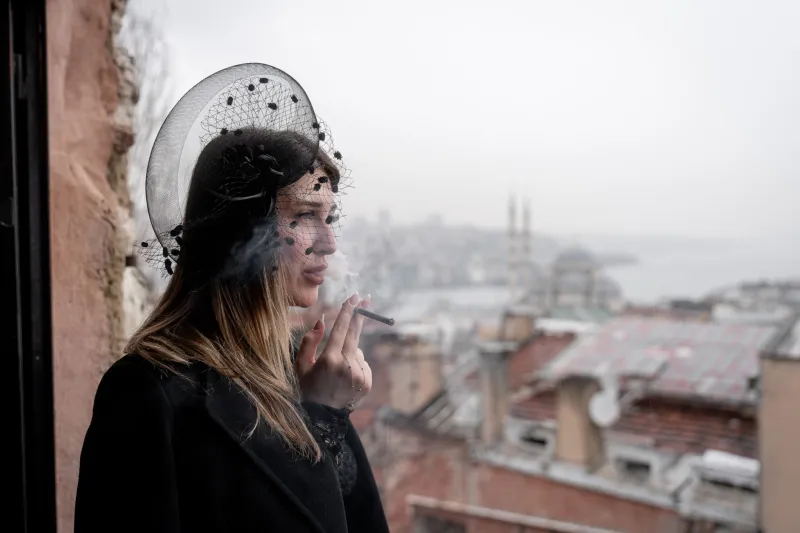
There is a particular kind of satisfaction that arrives not when something expected goes well, but when something you never thought to want appears precisely when you need it. A glass of water before thirst becomes conscious. A shift in conversation topic just as the previous one began to exhaust itself. A pause in an evening's itinerary that allows the city — Istanbul in this case, with all its layered splendor — to breathe into the space between two people. These are not accidents. They are the hallmarks of anticipatory service, and among the world's elite companions, they represent the most refined skill in a demanding profession.
For American travelers unaccustomed to the particular register of luxury that Istanbul's premier companionship market operates within, the concept of anticipatory service can initially seem abstract. We are a culture that prizes directness. We make lists, state preferences, and expect those preferences to be honored. What the finest companions offer, however, exists in a register beyond stated preference — it operates in the territory of unspoken need, and getting there requires a combination of preparation, psychological acuity, and genuine interpersonal investment that few service professions demand so comprehensively.
The Architecture of an Unspoken Moment
Anticipation, as practiced by elite companions, is not a passive quality. It is not simply the result of being attentive or polite. It is an active, ongoing process of observation and hypothesis — a form of real-time analysis that draws on everything from a client's body language and conversational rhythm to the subtle signals embedded in their professional background, travel history, and even the way they phrase their initial inquiry.
Consider what a seasoned companion absorbs before an engagement even begins. The platform through which a client reaches out often communicates more than the message itself. The specificity — or vagueness — of a booking request signals not just practical preferences but emotional orientation. A client who specifies a preference for quieter venues is not merely describing an acoustic preference; they are often disclosing something about their current psychological state, the nature of their trip, or the kind of restoration they are seeking. A companion who reads these signals accurately can begin shaping an experience long before the first meeting.
This preparatory intelligence-gathering is a discipline in its own right. Istanbul's most accomplished companions approach each new engagement with something resembling a researcher's methodology — cross-referencing available information, forming hypotheses about what a client may value most, and developing contingency frameworks for how the evening might evolve across several different emotional registers.
Why Intuition Is a Trained Capacity, Not a Gift
There is a tendency, particularly in Western cultural frameworks, to romanticize intuition as an innate gift — something a person either possesses or does not. The reality, as any behavioral psychologist or experienced hospitality professional will confirm, is considerably more pragmatic. Intuition, at the level practiced by truly exceptional companions, is a trained capacity built through accumulated experience, deliberate reflection, and genuine curiosity about human nature.
The companions who consistently exceed client expectations in Istanbul's luxury market share several observable characteristics. They are, almost without exception, voracious observers. They notice the small things — the way a client's posture shifts when a topic resonates versus when it merely politely interests them, the micro-expressions that precede a request the client hasn't quite decided to make yet, the conversational lulls that signal fatigue versus those that signal comfortable ease.
Equally important is what might be called emotional cartography — the ability to map a client's emotional landscape over the course of an engagement and adjust accordingly. A client who arrives from a high-stakes business meeting in the financial district carries a particular kind of tension that differs meaningfully from the restlessness of someone who has been alone in a hotel room for three days. Both may articulate a desire for good conversation and interesting company. What they actually need — and what an anticipatory companion provides — differs considerably.
The Istanbul Advantage: A City That Rewards Attentiveness
Istanbul, perhaps more than most cities in which premium companionship is sought, offers an unusually rich environment for anticipatory service to flourish. The city's geography alone — straddling two continents, layering Byzantine, Ottoman, and modern sensibilities into a single urban experience — creates a natural canvas for companions who understand how to read a client's relationship with place.
An American traveler encountering Istanbul for the first time brings with them a particular cocktail of wonder, mild disorientation, and the specific kind of intellectual excitement that comes from encountering a civilization whose depth exceeds what a few days of tourism can fully absorb. A companion attuned to this experience doesn't wait for the client to articulate what they want to see or understand — they anticipate the questions forming just below the surface and create space for those questions to emerge naturally, guiding the experience toward discovery rather than mere sightseeing.
For the return visitor — the American executive or cultural traveler who has been to Istanbul several times and considers themselves reasonably knowledgeable — the anticipatory challenge is different but equally sophisticated. Here, the companion's task is to locate the edges of familiarity and gently push beyond them, offering access to the city's more interior experiences in ways that honor the client's existing knowledge while expanding it.
What This Means for the Discerning American Client
Understanding anticipatory service as a genuine skill — rather than a pleasant accident — has practical implications for American clients seeking premium companionship in Istanbul. The most direct implication is this: the quality of the experience you receive is partly a function of the quality of the signals you transmit, however unconsciously.
This does not mean you need to prepare a detailed brief before every engagement. It means, rather, that allowing yourself to be genuinely present — arriving without the performative armor that so many professional Americans wear as default — creates the conditions under which anticipatory service can operate at its highest level. The more authentic the signals, the more precisely a skilled companion can respond to them.
It also means that selecting the right companion from a platform like Istanbul Escorts World warrants more than a review of photographs and listed interests. The profiles that signal a capacity for genuine attentiveness — those that reflect intellectual range, cultural fluency, and a demonstrated interest in the craft of companionship rather than its surface features — are the ones most likely to deliver experiences that exceed the brief.
The Differentiator That Cannot Be Manufactured
In an increasingly commodified luxury market, anticipatory service represents one of the few genuine differentiators that cannot be easily replicated or manufactured. Technology can optimize logistics. Aesthetics can be curated. But the capacity to recognize what a person needs before they consciously know it themselves — and to deliver it with enough subtlety that the moment feels organic rather than engineered — requires a depth of human attentiveness that remains irreducibly personal.
For American travelers who have experienced the finest hotels, restaurants, and professional services that New York, Los Angeles, or Chicago can offer, the discovery that Istanbul's premier companions operate at a comparable level of service intelligence is often genuinely surprising. It reframes the entire category of companionship, moving it decisively out of the transactional and into something that more closely resembles the best experiences of genuine human connection — the kind where, at the end of an evening, you find yourself wondering how the other person seemed to know exactly what the night required.