Unlocking the City: How a Well-Briefed Companion Becomes Your Most Valuable Cultural Asset in Istanbul
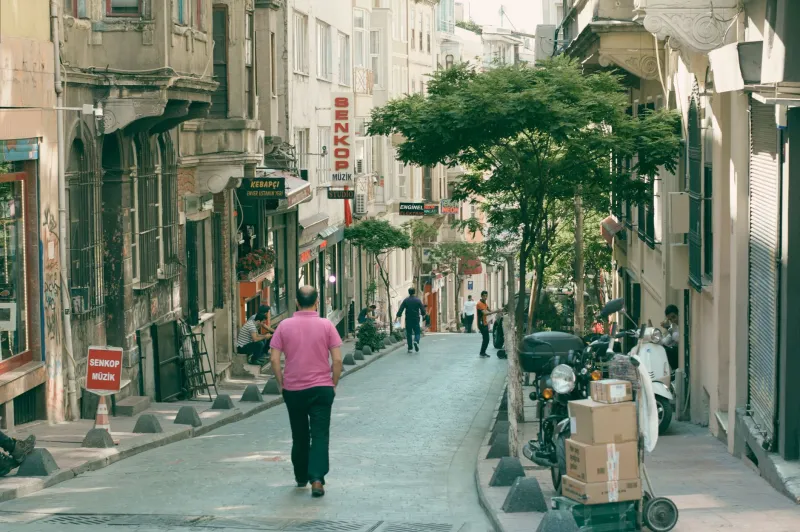
Most American travelers who arrive in Istanbul for the first time carry a mental checklist assembled from travel magazines, hotel concierge recommendations, and the curated highlights of a dozen influencer feeds. The Hagia Sophia. The Grand Bazaar. A sunset cruise on the Bosphorus. These experiences are, without question, magnificent — and yet they represent the outermost surface of a city whose real texture lies several layers deeper.
For those who engage Istanbul's elite companion services with intention and preparation, that deeper layer becomes accessible in ways that no tour operator, luxury hotel, or even a well-connected business associate can reliably replicate. The companion, when properly briefed, does not merely accompany you through the city. She — or he — becomes a cultural intermediary: someone whose personal networks, neighborhood fluency, and social intelligence convert your itinerary from a tourist's checklist into a genuinely curated immersion.
Understanding how to leverage that relationship begins long before you land at Sabiha Gökçen or Atatürk.
The Pre-Booking Conversation as a Strategic Instrument
Among the most underutilized tools available to the international traveler is the introductory exchange with a prospective companion. Most clients treat this conversation as logistical — confirming availability, discussing rates, establishing basic expectations. Experienced travelers, however, treat it as something closer to a creative brief.
Consider what a companion who has spent years navigating Istanbul's social geography actually knows: which neighborhoods are experiencing a genuine cultural renaissance versus which have been sanitized for tourist consumption; which restaurants are frequented by the city's creative and intellectual communities rather than by visiting executives; which galleries, rooftop gatherings, or private supper clubs require an introduction rather than a reservation. This knowledge is not catalogued anywhere. It lives in relationships and in the accumulated experience of someone who moves through the city as a native participant rather than an observer.
When you use the pre-booking conversation to communicate your actual interests — not generic preferences, but specific curiosities — you give an elite companion the information she needs to construct something far more valuable than a standard evening out. Tell her you are drawn to contemporary Turkish ceramics and she may know an artisan in Karaköy who opens his studio to serious visitors by appointment only. Mention an interest in the city's jazz underground and she may be aware of a weekly gathering in Beyoğlu that has no public presence whatsoever.
The briefing is the investment. The experience is the return.
Neighborhood Fluency and the Geography of Authenticity
Istanbul is not a single city in any meaningful cultural sense. It is a confederation of distinct neighborhoods, each with its own social codes, aesthetic sensibilities, and unwritten admission criteria. Nisantasi operates on entirely different terms than Balat. Kadıköy on the Asian side carries a bohemian intellectual energy that is worlds removed from the polished European ambiance of Bebek. Cihangir, long a haven for artists and writers, rewards those who know where to linger and whom to approach.
For the American traveler accustomed to cities where neighborhoods are relatively legible, Istanbul's social geography can feel genuinely opaque. The signifiers are subtle. The gatekeeping is rarely explicit but consistently real. Arriving in the right place at the wrong time, or with the wrong introduction, produces an experience that is technically present but socially hollow.
A companion who lives and works within these social ecosystems does not navigate them from the outside. Her presence in a given context is itself a form of social currency — a signal to the people around her that you are a guest worth engaging rather than a tourist worth tolerating. This distinction, invisible to most visitors, shapes the quality of every interaction that follows.
From Access to Immersion: What Changes When the Doors Open
There is a meaningful difference between visiting a city and experiencing it. The former is a matter of geography — you were there, you saw the things, you have the photographs. The latter is a matter of participation — you were introduced to people who shaped your understanding of a place, you ate food that was prepared because someone vouched for your appreciation of it, you left with stories that could not have been scripted in advance.
Elite companionship, at its best, is the mechanism that converts the former into the latter.
Consider a practical illustration. An American executive visiting Istanbul for a week books a companion and communicates, during their initial exchange, a long-standing interest in Ottoman architectural history — not the famous monuments, but the lesser-documented residential and civic structures that shaped daily life across centuries. A well-connected companion in that scenario might facilitate a meeting with an architectural historian at a local university, arrange a private walk through a neighborhood where such structures remain largely intact, or secure access to a restoration project that welcomes informed visitors.
None of this appears in any hotel's list of recommended activities. All of it is entirely possible through the right relationship, properly activated.
Practical Guidance for the American Traveler
Leveraging a companion relationship for authentic cultural access requires a specific kind of preparation on the client's part. Vague preferences produce generic experiences. The more precisely you can articulate your intellectual and aesthetic interests — the kinds of experiences that have genuinely moved you in other cities, the questions about Istanbul that a standard visit would leave unanswered — the more precisely your companion can respond.
It is also worth recognizing that this kind of access is not instantaneous. Some of the most valuable introductions and arrangements require lead time. Booking with sufficient advance notice — and communicating your interests early in that process — gives your companion the runway she needs to make arrangements that would be impossible to improvise on arrival.
Finally, approach the relationship with the same openness you would bring to any meaningful cultural exchange. The companion who facilitates your access to Istanbul's less visible social world is doing so on the basis of her own reputation and relationships. Treating that access with appropriate seriousness — arriving prepared, engaging authentically, respecting the contexts you are invited into — ensures that the doors she opens reflect well on both of you.
The City Beneath the City
Istanbul has been receiving foreign visitors for longer than most nations have existed. It has developed, over those centuries, a sophisticated capacity to offer each type of visitor exactly what they appear to want — and nothing more. The traveler who wants postcard experiences receives them in abundance. The traveler who wants something more is rarely turned away, but is rarely guided there automatically either.
The elite companion relationship, engaged with intention and intelligence, is one of the few reliable mechanisms available to the international visitor for moving past that default offering. It is not a shortcut. It is a relationship — one that rewards preparation, honesty about your interests, and genuine curiosity about a city that has more to offer than any single visit could exhaust.
For American travelers who have already seen the surface and want something beneath it, that relationship may be the most strategically valuable booking they make.