Mapping the Experience: How Istanbul's Neighborhoods Actively Shape Your Companionship Encounter
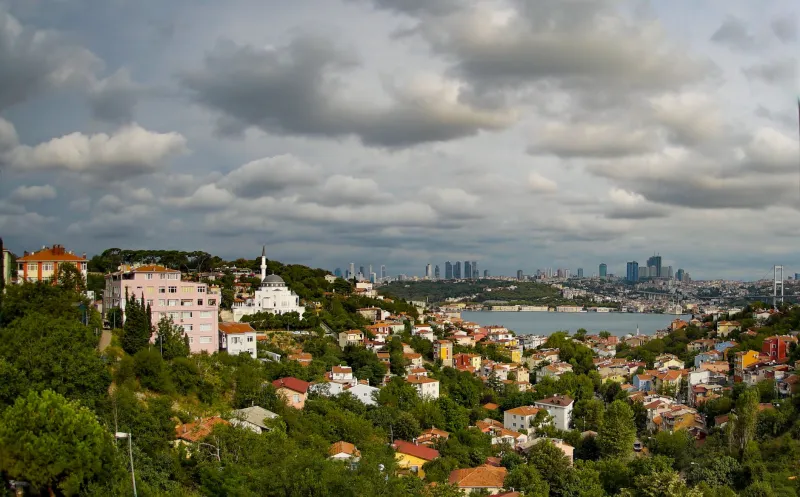
Most travelers approach Istanbul with a mental map drawn from guidebooks and travel blogs — a checklist of landmarks, a handful of recommended restaurants, a vague sense of which neighborhoods are considered upscale versus atmospheric versus authentically local. That map is adequate for sightseeing. For elite companionship, it is dangerously incomplete.
Location in Istanbul is not merely a backdrop. It is an active variable in the experience itself. The neighborhood you choose for a first meeting, a dinner engagement, or an extended evening shapes the social atmosphere, determines the logistical ease or complexity of movement, signals something about your own tastes and sophistication, and influences the range of experiences that become naturally available as the evening unfolds.
For American travelers arriving in Istanbul with companionship engagements already in mind — or considering arranging them upon arrival — understanding the city's geographic personality is not optional background knowledge. It is operational intelligence.
Beyoğlu: Energy, Visibility, and the Art of the Urban Evening
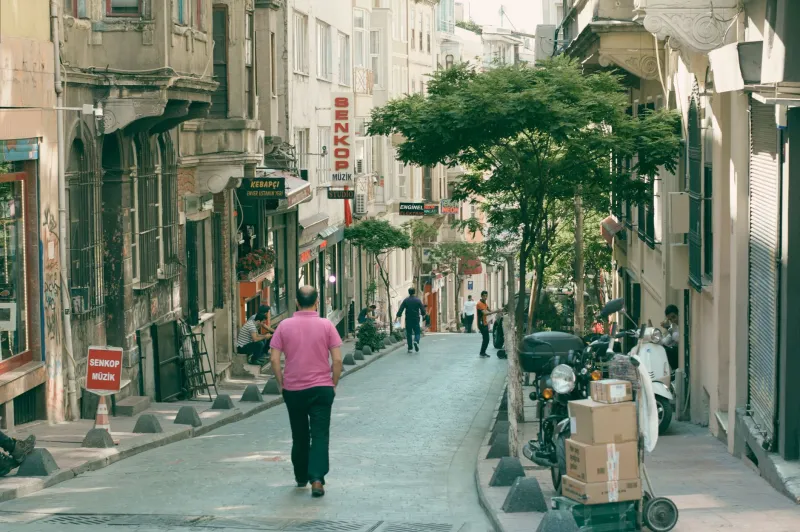
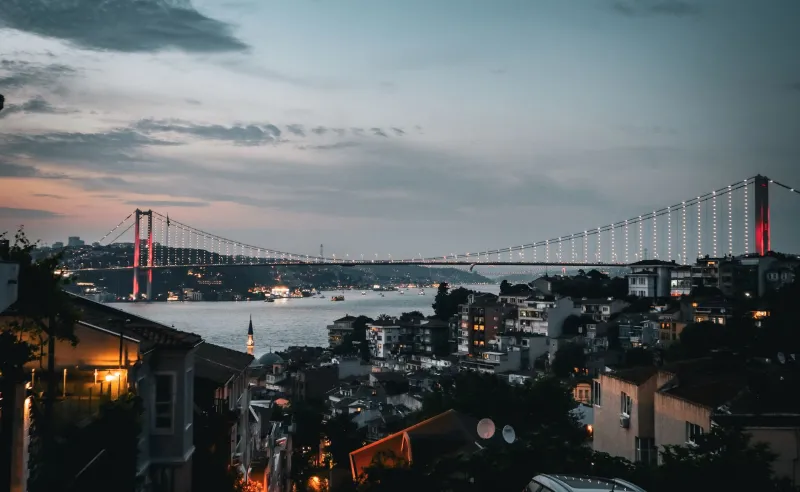
Beyoğlu is the district most international visitors encounter first, and for good reason. Stretching across the European side of the city from the iconic Istiklal Avenue down toward the waterfront neighborhoods of Karaköy and Galata, Beyoğlu is Istanbul's most cosmopolitan zone — dense with international hotels, rooftop bars, galleries, live music venues, and the kind of ambient urban energy that makes extended evening engagements feel effortless.
For companionship purposes, Beyoğlu offers significant advantages. The concentration of international-standard hotels means that meeting logistics are straightforward — there is rarely a question of whether your companion can reach the location or whether the venue will meet a certain standard of discretion and quality. The neighborhood's familiarity with international clientele means that mixed-company dining and socializing proceed without the self-consciousness that can occasionally surface in more conservative districts.
The trade-off is visibility. Beyoğlu is busy. Istiklal on a Friday evening is among the most densely trafficked pedestrian corridors in Europe. Clients who prioritize privacy and a lower profile may find the district's energy more exposure than they prefer. The solution is not to avoid Beyoğlu but to select within it carefully — the rooftop terraces of boutique hotels in the Galata pocket, for instance, offer the area's cosmopolitan atmosphere with considerably more intimacy than the main avenue.
Beyoğlu is best suited to clients who want an urban, socially vivid experience — dinner, a bar, perhaps a gallery opening — rather than quiet seclusion.
Nişantaşı: Discretion, Affluence, and the Language of Understated Refinement
If Beyoğlu is Istanbul's stage, Nişantaşı is its drawing room. Located north of Taksim Square on the European side, this residential and commercial district is where Istanbul's established wealth lives, shops, and conducts its social life. The streets are quieter, the fashion more considered, the restaurants more likely to have curated wine lists than tourist-facing menus.
For elite companionship, Nişantaşı is arguably the city's premier district. The social norms here are shaped by an affluent local clientele that values discretion as a matter of course — meaning that two well-dressed people sharing a quiet dinner attract no particular attention. The international hotel properties in this area tend toward boutique luxury rather than large convention-style establishments, which translates to a more personalized service environment and considerably more privacy.
Companions who work regularly with international clients in the upper tier frequently express a preference for Nişantaşı engagements precisely because the environment is calibrated for the kind of sophisticated, unhurried interaction that defines elite companionship at its best. The neighborhood rewards clients who are interested in genuine social experience — in conversation over an extended meal, in a slow walk through streets lined with independent boutiques — rather than those seeking maximum stimulation.
US travelers who have spent time in comparable districts — the Upper East Side in Manhattan, Georgetown in Washington, or the Magnificent Mile area of Chicago — will find Nişantaşı's register immediately legible. It is comfortable, expensive, and designed for adults who know what they want.
Sultanahmet: History, Atmosphere, and the Limits of Romance
Sultanahmet is the Istanbul that most Americans picture before they arrive — the Blue Mosque, the Hagia Sophia, the Grand Bazaar, the narrow cobblestone lanes of a city that has been inhabited for three thousand years. It is genuinely extraordinary, and for certain kinds of engagement, its historical atmosphere is unmatched.
For companionship, however, Sultanahmet presents real logistical and social constraints that are worth understanding before committing to it as a base.
The district is heavily oriented toward tourism, which means it operates on a different rhythm than the rest of the city. Restaurants in Sultanahmet are largely positioned to serve visitors who are eating early and moving on — the extended, leisurely dinner culture that defines elite companionship dining is harder to find here than in Nişantaşı or even parts of Beyoğlu. The hotel stock, while including several exceptional properties, also includes a significant volume of mid-market tourist accommodation that may not align with the standards expected at the elite companionship tier.
Sultanahmet is best used strategically rather than as a primary venue. An afternoon walk through the Topkapi Palace grounds, a late-afternoon tea with a view of the Bosphorus, or a brief early-evening visit to the bazaar district can be genuinely memorable components of a companionship experience — before moving to a different neighborhood for the evening's main engagement.
Kadıköy: The Asian Side, Local Energy, and the Educated Risk
Kadıköy occupies a unique position in Istanbul's social geography. Located on the Asian side of the city — accessible by ferry from the European shore in a crossing that is itself one of Istanbul's great small pleasures — this district is younger, more bohemian, and more authentically local than its European counterparts. Its streets are lined with independent record shops, natural wine bars, bookstores, and restaurants that cater to an educated, creative Istanbul demographic rather than international visitors.
For companionship, Kadıköy represents both an opportunity and a consideration. The opportunity is a genuinely different kind of evening — one that feels embedded in the city's living culture rather than in its tourist infrastructure. Companions who know Kadıköy well can unlock experiences that most international visitors never encounter: a fish dinner at a neighborhood meyhane, a late-night set at a small jazz venue, a walk through the Moda waterfront at golden hour.
The consideration is logistics. The ferry crossing, while beautiful, adds a layer of planning. And Kadıköy's social environment, while entirely welcoming, is less oriented toward international clientele than the European districts — meaning that language navigation and local knowledge become more important variables.
Kadıköy is best suited to travelers who have already spent time in Istanbul and want to move beyond the familiar circuit — or to those whose companion has deep roots in the Asian side and can serve as a genuine local guide rather than a geographic navigator.
Geography as a Design Decision
The most sophisticated approach to planning a companionship experience in Istanbul treats neighborhood selection not as an afterthought but as a primary design decision — one made in conversation with your companion, informed by your own preferences, and calibrated to the specific tone you want the engagement to carry.
A client who wants intellectual stimulation and social ease chooses Nişantaşı. One who wants urban energy and visual spectacle chooses Beyoğlu. One who wants historical atmosphere uses Sultanahmet as a backdrop before transitioning. One who wants genuine local immersion considers the ferry to Kadıköy.
In each case, the neighborhood is not simply where the experience happens. It is part of what the experience is.